


Potatoes may seem like they are basically all the same, but the different varieties have subtle differences that make them more ideal for particular applications.
Learn about the different types of potatoes, and which ones are best for your dishes. Find everything you need to know to make the right potato purchasing decisions. See information on potato varieties and sizing, potato grades, and potato storage and handling.
Popular Potato Varieties
Russet (Burbank)
Typically, harvest begins in September. Superior performance when deep-fried. Best for frying, and considered the #1 french fry potato. High solids, very versatile for many applications.
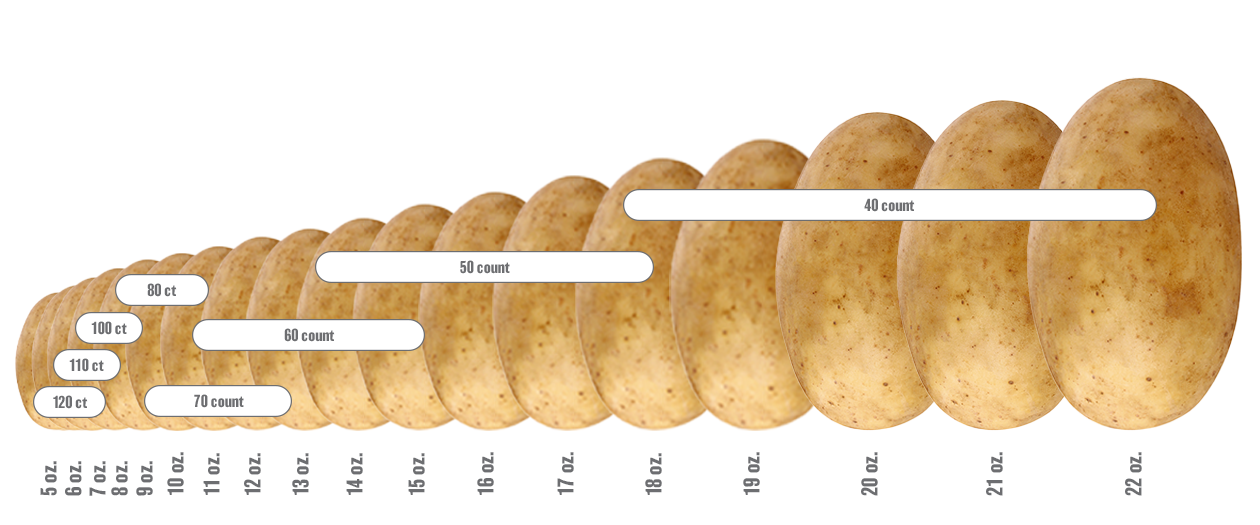
Sizing and Application
| Popular Varieties | Sizing | |||||||||||||||||||||||||||
|---|---|---|---|---|---|---|---|---|---|---|---|---|---|---|---|---|---|---|---|---|---|---|---|---|---|---|---|---|
| Russet Potato Sizing (Burbank & Norkotah) |
|
|||||||||||||||||||||||||||
| Round White (AKA Chef Potatoes) | A is usually cut up and further processed. B is the most common in foodservice. B and C are usually served whole; these are more expensive per pound than A's, but the serving cost per plate is less. 90 ct. is sold primarily in North Dakota. Jumbo or premium sizes are generally used for applications that require peeling. The larger-sized potato means fewer potatoes to peel and better yield. | |||||||||||||||||||||||||||
| Red | A: 2"-3.5", B: 1.5"-2.25" (most common in foodservice). C: .75"-1.625" “Thumb”: fingerling. | |||||||||||||||||||||||||||
| Yellow / Yukon Gold |
Size A: 2"-3.5". | |||||||||||||||||||||||||||
| Sweet | Grades: U.S. Extra No. 1 & U.S. No. 1. Also can be found as a fingerling size. | |||||||||||||||||||||||||||
Potato Grades
Prior to packing and shipping, potatoes are graded and, where appropriate, sized.
U.S. No. 1 Potatoes must meet the following requirements:
- Similar varietal characteristics, except when designated as a mixed or specialty pack
- Firm, fairly clean, fairly well-shaped
- Free from freezing, blackheart, late blight, Southern bacterial wilt and ring rot; and soft rot and wet breakdown
- Free from damage by any other cause
- Size not less than 1-7/8 inches in diameter, unless otherwise specified in connection with the grade
U.S. No. 2 Potatoes must meet the following requirements:
- Similar varietal characteristics, except when designated as a mixed or specialty pack
- Not seriously misshapen
- Free from freezing, blackheart, late blight, Southern bacterial wilt and ring rot; and soft rot and wet breakdown
- Free from serious damage by any other cause
- Size not less than 1-1/2 inches in diameter, unless otherwise specified in connection with the grade
Commodity Potatoes – Storage and Handling
Proper storage and handling of potatoes is just as important as the quality of the pack, so that the product can behave as it should. The following tips are recommended on how to best handle and store potatoes.
- Store potatoes in a cool, dark and well-ventilated place. Darker storage areas will help prolong shelf life and avoid greening, which can cause bitter taste: Black Zone - outside the cooler
- They will keep about a week at room temperature, and for several weeks at 45-50°F
- Below 45°F, potato starch will turn to sugar. This process can be reversed by storing potatoes at 55-60°F for up to 14 days
Elevate Your Menu with Innovative Potato Creations
Is there anything more versatile than the potato? Check out these tasty recipes for great dishes that make everyone’s favorite spud the center of attention.